Tuesday, April 26, 2011

Bachelor Parties

            More than a couple of my good buddies are getting married this year (2011). And you know what that means, don’t you? Bachelor parties!


Wait... But how do you know? How do you know that the answer to “And you know what that means, don’t you?” is “Bachelor parties” and not “Getting drunk with people’s parents!” or “My friend Troy performing Al Pacino’s halftime speech from Any Given Sunday, pretty much verbatim, from memory!” or “I’m starting to worry about getting old and being alone, FOREVER”?
According to Wikipedia--In Which We Trust--a bachelor party is “A party held for a bachelor shortly before he enters marriage, to make the most of his final opportunity to engage in activities a new partner might not approve of”. And you know which activities these are, don’t you? DON’T YOU! Wait, but how do you know that the activities that will most likely be “engaged in” in the name of “making the most” of ones “final opportunity” to engage in them are (1) drinking in/to excess:


And (2) strippers:


HOW (THE H*LL) DO YOU KNOW?!?

Here are my questions: Why are strippers and drinking in/to excess the two activities that will obviously be engaged in during bachelor parties’? Or, asked differently, why are these the activities that we’ve agreed make the most of somebody’s final night as a bachelor? Like, how is it sooo damn obvious that these are the two activities that really make the most of what Wikipedia ominously calls a bachelor's Final Opportunity?
OK, rather than pussyfoot around and act like I haven’t made my mind up about the whole bachelor-party thing, I’m just gonna' Cut Right To It:
First, drinking in/to excess doesn’t make the most of ones Final Opportunity, at least, not by itself; and second, neither do strippers. And further, deep down, everybody knows this.
How do I know the first part to be true? Because nobody needs to give up drinking when they get married, or even drinking in/to excess (like, most of my buddies won’t actually be giving up drinking in/to excess when they get married, I PROMISE). And, if anyone does need to give up drinking it’s probably because they just need to Give It Up, Period.
Most of the Would-Be-Wedded don’t need to give up getting drunk, but rather need to give up one of the things that drinking in/to excess has, can, and tends to facilitate... Do you know what I’m talking about? I bet you do. In the event that you don’t, I’ll give you a hint: It’s not anything as utterly meaningless as what transpires between strippers and their clientele. (Sorry, those of you who think the relations/connections that are purchased at strip clubs are Real and not just that, purchased, i.e., relations without any obligations exceeding those of the financial exchange that created the "relation"/"connection".)
What’s something that excessive drinking has, can, and will continue to lead to that you think maybe you’d have to give up if you were to get married according to non-polygamal parameters? Well, of course, having sex with people other than your beloved. But what if sex is just one possible consequence in a whole series of antecedents, one of which may be alcohol--alcohol is, primarily, a facilitator--that must also be given up? What if sex is just something on the Far End of a whole spectrum that, once wed, is sort’a kind’a verboten, and understandably so? Interest, curiosity, desire. Furtive glances. Doubt. Insecurity. The summoning of Courage. Initial approaches. Awkward exchanges. More doubt and insecurity, perhaps. Provocative and invigorating, stimulating, conversation. Not-quite-accidental touch. A caress here, a caress there. A secluded walk. Some anxious texts. Some sexy texts. A connection, rife with the excitement of possibility instead of the tedium of actuality. The hopes/dreams of something different--different tastes and smells and stories and proclivities and commitments and values. A kiss. A relationship, but one of the non-friendly, non-professional variety. One which might tend towards sex, but which also tends towards strong feeling and History and obligations and trust, the very particular human experience of forming a new world with another human being...
Isn’t it the possibility of all the above, but with other people, that we’re supposed to give up if/when we wed (assuming we’re not polygamists)? And doesn’t all of the above come nowhere near occurrence between my good buddies, when they’re knuckle-dragging drunk, and strippers? Which begs the question: Is drinking to excess and partying with strippers really what it means to make the most of ones Final Opportunity to be a bachelor? Be honest...

In light of All This, what do I propose? A different kind of bachelor party. A bachelor party that actually makes the most of ones final evening of bachelordom. A bachelor party that I can’t imagine anyone--either of the betrothed--actually wanting (or agreeing to, for that matter, because perhaps they do want it...). The following is my vision of a real bachelor party:

  • It’s got to be set in/at house-party, not a bar-party (albeit, perhaps bars can be visited early in the evening).
  • The house in which it’s set can’t be one of the bachelor’s good-buddies houses, i.e., the house needs to be one w/which the bachelor is unfamiliar.
  • Most of the guests at the house party (with the exception of a few close friends, probably only the bachelor’s groomsmen, maybe) must be strangers to/for the bachelor.
  • A significant number (5-10) of the guests at the house-party must be people in whom the bachelor might be able to develop a romantic interest (e.g., my buddy Nate would have a bachelor party stocked with, primarily, red-heads; my buddy Matt, short blonds; me, feisty intellectuals).
  • The drink of choice, i.e., the one/only drink at the party, must be some “jungle-juice” equivalent, i.e., a high-alcohol, All Too Easy to Drink, drink.
  • There must be a dance-floor, preferably a dark one, preferably in a basement.
  • There must be a good DJ.
  • There must be places in/out of the house in which deep/meaningful conversations can occur w/out interference...
  • Perhaps have one or two of the bachelor’s ex’s--only ones for whom the bachelor still has some positive feelings--attend the party, staggered over the course of the evening.
  • Make sure that the bachelor doesn’t need to worry about getting home.
  • Provide food, at some point, but not too much.
  • Have there be a second party that can be transitioned to, at some point.
  • Have one of the bachelor's good buddies hold his cellphone for the evening.
            The above is a list of what I take to be the necessary conditions for a real bachelor party to occur... Uh, any takers?!?

Wednesday, April 13, 2011

What the H*ll was That?

If I’d had my wits about me I would have asked her, “What the h*ll was that? That look you just gave me? What the h*ll was that?” Alas, I never quite seem to have my wits about me when I’d like to.
I was standing at the counter of one of your Portland Area coffee shops, waiting to order a glass of milk for the P.B. and J. I’d smuggled in, when the girl working the espresso machine looked over at me and gave me this look, the kind of look that girls only give guys in Fantasy Land, i.e., a “come hither” look. You know what I’m talking about:


I was startled, shocked, flummoxed, dumbfounded, befuddled by this look, and it took me a little while but I eventually realized that this was just her way of greeting me, of saying "Hello," of acknowledging my presence, perhaps her standard way of/for acknowledging the presence of any/all her customers!?! How’d I manage to figure all this out? Because I plum just didn’t say anything in response to the look she gave me, my face totally slack with confusion--tilted to the side like a dog’s after you’ve just fake-thrown a ball and hid it behind your back and they're just not sure why--and then she raised an eyebrow, which I--thank my lucky stars--recognized as indicating that she was anticipating a and expecting my response, i.e., used to having people such as Yours Truly actually respond to such a look along normal customer-service lines! And so, after those few milliseconds of dumbfounded-befuddlement and her raised eyebrow and my realization that she actually expected me to respond along normal customer-service lines and whatever the h*ll else Fired Off in the head of Yours Truly, I was like, “Hi, I’d like a glass of milk, please!”


Call me old fashioned, but I’m pretty sure the only people that should be giving me the kind of look that the girl working the espresso machine gave me today are lovers (which I don’t have) and strippers/prostitutes (whom I never visit), but even then I’d probably be Supremely Weirded Out if someone I was dating or married to (or whatever) or, h*ll, even a stripper ever gave me the kind of look that the girl working the espresso machine gave me today...

Wednesday, April 6, 2011

What Is to Be Done: Greenpeaceniks

This is the first piece in a what will hopefully become a series. The title of the series--“What Is to Be Done:”--comes from something written by Lenin; and no, not that hippy-dippy Brit, John, but that supreme bad*ss and leader of the Russian Revolution Vladimir Ilyich:


That’s right. Look at that hat.
In Lenin’s What Is to Be Done? he discusses all the pressing dilemmas and issues facing the Russian communists back in 19-whenever, and he does so with acuity, style to burn, and a whole lot’a piss and vinegar.
All you would-be partisan politicians and commentators out there--


--could do a lot to sharpen your bombastic diatribes by brushing up on your Lenin. Lenin was/is a Kung-Fu grandmaster when it came to making his opponents and detractors sound/look like idiots and heretics.
On the flip-side, my “What Is to Be Done:” has pretty much nothing to do with the trials and travails of Lenin’s much beleaguered communist party, nor with making my opponents and detractors sound/look like idiots (even if that happens as a side effect). Instead, my W.I.t.B.D. will be trying to deal with problems or dilemmas that you and I face in our daily lives, problems where Right Conduct or Right Action are at issue (hence the title). My primary goal with this series is to try and deal with said problems/dilemmas in a way that helps the lot of us actually deal with them, and to do so with brevity and a little wit, not that my wit is little, but, you know, like I want my pieces to have a little wit in them, not like in terms of quality, but, like, in terms of quantity, you know? Like a little wit here, a little wit there...


What Is to Be Done: Greenpeaceniks

It’s a day, any day. You’re in downtown P-town. Westside, Eastside, it doesn’t matter. Maybe you’re alone, maybe not; OK, so you’re alone. You’re standing at one of Portland’s many automated crosswalks, waiting for your chance to go from one side of the street to the other. You’ll jaywalk, if the coast is clear. Maybe it is, maybe it isn’t.
It’s probably raining. Hell, it is raining. For a moment, only a moment, you stop looking to see whether or not you’re going to get your chance at minor criminality and instead look across the street. And there they are:


F*cking Greenpeace! Only, they’re not talking to three hapless tourists, the poor bast*rds, even though you’re wishing with all your heart that they were and you’ve read The Secret more times than you’d ever willingly admit and so, like, actually believe that if you just visualize sh*t it will happen to/for you and so you just close your eyes and visualize the sh*t out of an opposite side of the street sans Greenpeace and with maybe, what, like a Snapple Sample Stand or something relatively innocuous like that on it... And then you open your eyes: The Secret is garbage! The "Greenpeacenik"--my trademarked name for them and their ilk--is still there! Just standing there, feet spread about shoulder width apart, some kind of rain-jacket on, little binder under one arm or the other. If they’re male, they’ve usually got some craggy facial hair and a big ol’ sh*t eating grin on their face. If they’re female, they’re usually just a little too cute, in an eclectic and unhygienic kind’a way. And they’re looking right at you. Not behind you. Not above you. Right at you. And you feel kind’a like Bill Murray’s Venkmen must have felt in Ghost Busters when he first encounters Slimer in the hotel... “He’s looking at me, Ray...”


(Minus the T-shirt, of course.) And you’re like “Sh*t,” which brings us to the titular question of this series: What is to be done?
   
          In this series, what I’m probably going to tend to do (we’ll see...) is begin to try to answer the question of W.I.t.B.D. by first asking whatever I understand to be the Necessary Prerequisite Questions (N.P.Q.s), i.e., questions that need to be asked/answered prior to figuring out which Possible Course of Action (P.C.A.) we should take. Once we’ve laid all this out, then our answer to the bigger/broader W.I.t.B.D. should be pretty clear, hopefully.

         Necessary Prerequisite Question Numero Uno: Are you in a rush? Like, really? Like are you on your way to a meeting or a date or a movie, i.e., something for which you’d be punished for being late? Or, along the same lines, are you operating within a limited time-frame in which you are supposed to accomplish Objective X, e.g., to get/eat lunch or drop-off/pick-up Object Y?
         N.P.C. Numero Two-o: What do you think of Greenpeace? And/or, why do you think the Greenpeacenik does what they do? Like, what’s their motivation for standing on some street corner and giving you the biggest possible sh*t-eating grin a human being can muster without the help of Hard drugs?
         N.P.C. Numero Drei: What kind of person do you want to be, like, in general?

         Now, before we answer the above questions (even if you’ve already answered them for yourselves), let’s lay out what I understand to be the Possible Courses of Action available to those of us who’re unlucky enough to be staring down the barrel of a, er...


Possible Course of Action Numero Uno: Straight-up avoid the Greenpeacenik, the Green Piece of..., i.e., cross the street in a different direction or at a different location, cut a hard angle before you reach the far curb, or pull a big-fat 180--whatever it takes to not have to pass within a quarter-mile of their persons, if that’s even what they are!
P.C.A. Numero Two-o: Listen to the Greenpeacenik, i.e., cross the street and when what sound like words start emerging from between their sh*t-eating, dope-smoking (I mean, probably, right?) grins, nod your head, ask follow-up questions, nod your head some more, rinse, repeat, etc.
             P.C.A. Numero Drei: Confront the Greenpeacenik, i.e., cross the street and B-Line directly for M-F’er for the purpose of delivering a haymaker...


Yeah, something like that, but maybe with words (maybe...), perhaps along the lines of, “Can’t you find a less simultaneously sycophantic and self-congratulatory form of employment? Oh, not in this economy? Well, maybe you need to go back to school and get a degree in something other than philosophy!” Ouch...
             P.C.A. Numero Four: Quasi-avoid the Greenpeacenik, i.e., don’t not cross where you initially intended to cross, but, instead, cross and just smile tersely and avoid eye-contact while you’re within the range of their desire to shake your hand and exchange names and life-stories and establish the kind of symaptico necessary to sell sh*t that can't sell itself, and move in a small but definitely noticeable parabolic arc, like the kind that ships try and take around icebergs:


             If your answer to N.P.Q. Numero Uno is/was that you have either a meeting/date to get to or some objective to accomplish within a limited time-frame, then you probably shouldn’t take P.C.A.s Numero Uno, Two-o or Drei, all of which will probably wind up costing you valuable and irrecoverable minutes (unless your haymaker is super Swift and Sweet, in which case...), which means that P.C.A. Numero Four (quasi-avoid) should be a pretty tempting one. HOWEVER, whether or not you should take P.C.A. Numero Four as your own personal course of action depends on your answers to N.P.Q.s Two-o and Drei. If your answer to N.P.Q. Two-o is something along the lines of “I think people who work for Grenpeace do what they do just to torture people and feel self-righteous, the masochists!” then you shouldn’t feel all that bad about taking P.C.A. Numero Four, unless your answer to N.P.Q. Numero Drei is some amalgamation of, “I want to be the sort of person that treats people, even people that I find obnoxious, with a modicum of respect/decency, and/or I want to be the sort of person that doesn’t cower in the presence of people that I find obnoxious or people that make me uncomfortable.”
So, if your answers to the N.P.Q.s go, “I’ve got a pressing engagement; I think Greenpeace is sh*t; but even sh*t deserves decent, human treatment,” then don’t take P.C.A.s Numero Uno, Two-o, Drei or Four (even though Four looks like the best). If your answers go, “I’ve got a pressing...; I think GP is sh*t; but I don’t think sh*t deserves the treatment I give to non-sh*t,” then I think you should have no internal qualms taking P.C.A.s Numero Drei or Four the next time you encounter a Greenpeacenik. If, however, your answers go, “I’ve got...; but I don’t think GP is sh*t,” then I don’t think you should be taking numeros Uno, Two-o, Drei or Four... But then what?
   
Let’s explore the flip side. If your answer to N.P.C. Numero Uno is something to the effect of, “I’ve got no pressing date or commitment or deadline, even though I sure-as-sh*t wish I did...,” then your answers to N.P.C.s Two-o and Drei are going to be of the utmost importance in determining which P.C.A. you should take. If your answer to Two-o is “I think Greenpeaceniks are sh*t, total shit, less than human beings, degenerates, etc.,” then you should probably take P.C.A. Numero Drei and start delivering haymakers left and right, unless your answer to N.P.C. Numero Drei presents a conflict of interest in the form of, “I want to be the sort of person that doesn’t punch others in the face when I think they’re obnoxious,” in which case: No haymaker; but maybe Numero Four?
If, on the other hand, your answer to N.P.Q. Two-o is either “I think GPniks do good work,” or something to the effect of, “No Greenpeacenik, no matter how obnoxious, actually deserves to be attacked for what they do because they’re really just people, people like you and me, people doing a job, probably a job they don’t always like but which they do anyways because they want to make a living and want to do work that they don’t think-of-as/feel-to-be totally meaningless and without value,” then you probably shouldn’t take P.C.A.s Numero Uno or Drei or Four.
(If you’re like me and you’ve ever taken the time to watch a Greenpeacenik work their corner, and they do indeed work it, well, I can't imagine that lepers get avoided to the same degree, or in the same numbers--like sheer number of people that will go out of their way to avoid them--that a Greenpeacenik does. I mean, honestly, it’s got to be a little bit depressing, day in, day out... And isn’t all that they’re really guilty of--you tell me?--some combination of: First, selling something people aren’t necessarily interested in buying; and second, making--intentionally or no--people feel bad for not being interested in what they’re selling (“You don’t want to save the planet!?!”)? And what’s their punishment? The kind of social ostracization/pariahdom reserved for the dying and the criminal.)
Now, if you’ve taken P.C.A. Two-o before, i.e., actually tried listening to some Greenpeacenik’s spiel, then you know where that takes you and how much time it takes to get there--and I mean we’re all going to die someday, right? So, in actuality, P.C.A. Two-o is--even if you think Greenpeaceniks either do Good Work or aren’t some kind of abomination, and even if you also want to be the sort of person who gives others the benefit of the doubt and/or treats All with Decency--really a “Fool-Me-Once” kind’a option, in my opinion.
Which seems to leave those of us who do have the time and who don’t think Greenpeaceniks carry some kind of virus--or those that don't have the time but either like GPniks and their work or think that everybody, even the lowest of the low, deserves our humanity--with P.C.A. Numero Four as our shared best-bet. However, if your answer to N.P.Q. Numero Drei is in fact something like, “I want to be the sort of person that treats people, even people that I find obnoxious or that I don’t want to give my time to, with a modicum of respect/decency, and/or I want to be the sort of person that doesn’t cower in the presence of people that I find obnoxious or people that make me uncomfortable,” then that rules out P.C.A. Four, at least in my book, which takes us to my secret/hidden P.C.A., P.C.A. Numero Funf!

P.C.A. Numero Funf: Treat the Greenpeacenik like a person, a person who is trying to sell you something you’re not interested in buying or that you don’t want to make time for, sure, but a person none the less. And just what does this P.C.A. look like in action? Let us return to our all-too-real fantasy scenario in which you’re face-to-face with:


Now, take a deep breath. Recall how to use your proton accelerator. Remember: Don't cross the streams, er... Look both ways and verify that you’re not going to get hit by a car, bus, MAX-train or hipster on a fixie. Jaywalk. Or wait for the signal, that is, if part of your answer to N.P.Q. Drei is/was “I want to be a gutless, law-abiding citizen at all times!” Walk straight across the street, right up to and around--but not in that ship-avoiding-an-iceberg kind’a way--the Greenpeacenik. Make the kind of eye contact you make when somebody is trying to talk to you. Say “Hi” or “Hello” or “Sup” or whatever. Consider shaking their hand, if it’s extended (it probably won’t kill you, probably...). Tell them you’re “Not interested.” Wish them well. That’s it. That’s all. Rinse, repeat.


--If you’ve got a better answer, I’m mostly ears.

Thursday, March 31, 2011

M.A.V.

From deep within the Stumptown Coffee Roasters on SW 3rd:

In a place where the apparent sole basis for esteeming the worth of others is Style of Dress--and not just any old Style of Dress but a very particular Style of Dress, a Style of Dress that itself values eccentricity as an End In Itself--the stage is set for the fashion equivalent of the nuclear arms scenario known as M.A.D., or, Mutually Assured Destruction, which I’m going to call “M.A.V.,” or, “Mutually Assured Vacuity,” where everyone is at risk of having nothing but vacuous relations with everybody else. Scary a** sh*t, I know.

So, here’s my question: How does one get out of a M.A.V. scenario? Assume that you’re the fashion-equivalent of some relatively podunk--at least in terms of nuclear armature--country, like France, and that the Russkies and the Amis--the coolest/most fashionable kids--have started launching their nukes...


One can not fire, i.e., dress like the unintentional geek and/or dud. This tends to be yours trulys tried and, er...


The second option: one can fire ones own nukes, launch a couple at England or Germany, i.e., do ones damndest to not dress like the rest of them (and therefore wind up looking like the rest of them because you’ve failed to understand the trappings of the form/content distinction). Honestly, I feel the worst for the people that take this course because it’s F*CKING M.A.V. PEOPLE and there’s just no stopping once you start...


Sweet Jesus.

The third option is, what, launch a nuke at the fashion equivalent of some relatively nuclearly hapless country, like the Netherlands or Brazil. No African countries because that wouldn’t be fair. Same goes for Canada. But what does this response to M.A.V. actually look like? I’m not sure...
Billy Zane?


Jimmy Fallon?


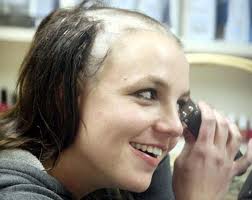
Britney Spears?


Anyways, my point is/was just that I’m not sure what the third option actually looks like, in action. Maybe B-Spears was actually onto something? Probably not.

The fourth option is to just fold-up shop and drop-off the World (fashion) Stage entirely, i.e., find a different coffee shop for a hangout spot, one that’s filled with less fashionable people. But the problem with the fourth option is that, well, some of the girls present at places like the Stumptown on SW 3rd are just too damn cute...


P.S. Yours Truly recently purchased some jeans that are, uh, periwinkle in color... Sh*t.

Monday, March 21, 2011

Hey, Can You Turn Down the Music?

A few weeks ago, I was at Barista, a swanky little coffee shop down in the Pearl District and straight out of Portlandia, i.e., staffed by a bunch of young retirees (men and women with big glasses and tats and attitudes and graduate degrees in areas as short-term economically disadvantageous as my own), serving like 46 kinds of exotic espresso, impractically small, etc. So, I’m sitting, sipping my Big Mutha’ Trucker Americano (it had a name like that, I swear), and listening to a bunch of Super-Cool for White Kids Music. In this case, the SCWKM (prounounced “Squi’cum”) happened to be a bunch of early 90s hip-pop playing just loud enough for everyone to hear and recognize and be able to proceed to reflect upon for the purpose of appreciating the super-coolness of its promulgators; it was not, however, playing obnoxiously or offensively loud (one should never offend others, now should one...).
The music--Biggie, Warren G, etc.--wasn’t bad or annoying or anything like that, but then I’m super-cool, too, like Straight Out’a Portland!, in fact, sort of, so... But even if it was bad or annoying or something like that, there’s no way I would’ve asked the Barista staffers to turn it down. Hell, they could’ve been blaring old Ska and I wouldn’t have asked them to turn it down. Why? Would I be too embarrassed to reveal my lack of coolness to people as cool as the Barista staffers? I sure hope not. No, for me, and this is my honest-to-goodness answer, I do not understand myself to have much of a say in the kind of music that Barista plays or doesn’t play, as in, if I don’t like it, tough-toodles for me, it’s up to them, I can go elsewhere, it’s their coffee shop, they have the Power, etc. Maybe I could argue with them that Biggie actually kind’a sucks (sorry, all you Biggie lovers out there) and that their SCWKM is just that (“Squi’cum”), but I’d have to argue and win these points if I actually wanted the music to change...

Early last Wednesday morning, no later than 7:15, working at my own coffee shop, we were listening to Corporate Unapproved soul music--James Brown, Sam Cooke.
“Can you turn down the music?” asks a man, a white man, an older man, a large man, a man of the ex- collegiate middle linebacker variety--big broad forehead and shoulders and jaw--and curly white hair, a customer, “Jimmy.”

  
Yeah, that’s about right.
“Sure,” I reply with a protracted “uuuuuuuurrrrr.”
“Thanks,” says Jimmy before he lumbers back over to the little granite table he’s sharing with his wife and his friend, and before I make my way to the back of the coffee shop, and not to turn down the Corporate Unapproved soul music we’d been listening to since 5:30, -ish, but, rather, to turn it off and turn on the Corporate Approved classical loop that I/everyone else has been listening to non-stop for at least the last year and a half.
Even though nobody else requested the music change and even though Jimmy did not actually ask me to change the music (he merely asked me to turn it down), I did not hesitate to do so. Immediately after having had done so, I asked myself, Why the hell did I just do that? Well, in part because I suspected that Jimmy was not the sort of guy who really liked soul music, in part because we aren’t supposed to play non-C.A. music while the shop’s open, in part because my shift-lead asked me to do so, in part because Jimmy is kind’a scary, and in part because of what I understand to be the nature of the relationship between me, my employers and our customers, like Jimmy.
What’s the nature of said relationship? I’ll be blunt: customers like Jimmy have The Power, or, at least, my employers and myself give it to them in that we do our very darn-damndest to give all the Jimmys of the world what they want, when they want it. Why do we do this? So that, presumably, all the Jimmys of the world will stay our customers. What’s the ideology that undergirds such a relationship? That if we don’t give all the Jimmys of the world what they want, when they want it, they won’t be our customers; that giving them what they want makes them happy. Beneath both of these ideologies is the one that claims that getting what we want makes us happy and loyal and all that jazz, too. But is getting what we want really what makes us happy?
I don’t know about you, but what I want changes pretty regularly. When I was 26 (i.e., now), I wanted, more than anything, to finish my second novel and rewrite my first and get both published by the end of the calender year... When I was 25, I wanted to prove to myself that I could stick with a romantic relationship... When I was 24, wanted to get the hell out of O-H-I-O... 23, to get my PhD in philosophy, preferably from Depaul... 22, gulp, move to O-H-I-O... 18,  KJO and a BMW M3... 16, Fortress Maximus, the biggest Transformer ever...
 
13, braces off... 10, Shawn Kemp’s Kamikaze basketball shoes... 8, be a professional basketball player... 5, Fortress Maximus, again... My point is that what I’ve wanted in my own life has changed pretty regularly. Sure, occasionally it’s stayed the same for a few months here, a few years there, but then it has changed again, perhaps back to something from before, perhaps to something new--just like that. And then, whenever I’ve gotten what I wanted, was I ever truly happy? For a spell, sure, but usually all too brief.
If we were to ask Spinoza why our desires change so gosh-darn much, he’d tell us it’s a function of the fact that we stand in pretty passive relationship to them--i.e., our desires move us, not the other way around. We do have, of course, the ability to reflect on and address--Spinoza calls it taking an “active” relationship w.r.t.--our desires and so can abstain, sublimate or substitute our desires with a certain degree of plasticity--
 
(I just made a pretty complicated Catholic priest joke, for your information...LAUGH!)--but that’s beside the point. What’s my point? That we don’t necessarily have control over what we want. In conjunction with this and the fact that it changes pretty regularly, getting what we want doesn’t necessarily make us happy and doesn’t necessarily make desire go away. Such is the nature of desire, says everyone from the Ancient Greeks to Buddha. Why else would the advertising industry be a multi-baggillion dollar one?

Part of my reason for thinking that getting what we want doesn’t necessarily make us happy is that what we want is constantly changing, not up to us, and never quite satisfying once we get it. Another part of my reason is slightly more complicated and less common-sensical and has to do with what I understand to be the importance of having a sense of self that isn’t “total” if we’re going to be happy. What do I mean by this? Well, for example, back in Spinoza’s time (1632-77), a great many people believed that everything on earth was put here by God for humanity to use in any way it saw fit, and not only everything on earth but everything in the whole universe, the center of which was earth. Spinoza considered this perspective incredibly vain and stupid and set about proving--as in used the method of geometric proof--said vanity and stupidity with his Ethics.
Many of us, present company included, often think/feel that we’re the center of everything. This thought/sentiment is not entirely our faults. For one, we’re constantly told that we’re the center of the universe and that our wants and desires are paramount. Those people that work in that multi-baggillion dollar industry, advertising, tell us this all day, everyday. For another, we experience ourselves as being at the literal center of everything: our worlds extend out from us, us being at point “0.” For yet another, we’re regularly treated like we’re the center of the universe, e.g., when we ask that music be turned down at some coffee shop and somebody actually turns it down without any resistance. DAMN IT!!!
When we’re regularly told that, experience, and are treated like we’re the center of the universe, that our personal wants and desires are paramount, our sense of self becomes what I earlier called “total,” i.e. we start to believe that everything that exists outside of us is actually there for us. Why is this bad? Or, why doesn’t this make us happy? How about this, and this is my honest to goodness best answer: it’s boring. Not that it’s a lie, mind you, or untrue, but that it’s boring, boring, boring. Don’t believe me? Think of an old-school patriarchal marriage in which the man says “Honey, I want Such and Such for dinner,” and the woman goes and makes Such and Such for dinner, or in which the man says, “Honey, give me a b.j.,” and the woman gives him a b.j., etc. Such a dynamic was, for a time, thought of and/or promoted as the ideal for relationships between men and women (and still is in some places), and while it might sound nice to some of you to have a relationship with somebody where all you have say “I want X” and get it, I’ll tell you this: friction and resistance and negotiation and play and strife and obstacles, these are the things that make our lives colorful and fun and meaningful. And hard, sure. But meaningful. And life without friction, resistance, negotiation, play, strife and obstacles, especially between people, isn’t quite worth living. Call me crazy, but I like having to fight for my b.j.s.
As consumers, do we not presently find ourselves in a situation similar to that of the old-school patriarchal marriage, where we’ve come to believe that the ideal relationship between us anyone whom we pay for anything is just to get what we want? That this is what will make us happy? And does it? Does it make us happy? Sure, sort of. I will only answer for myself and my side of this relationship, but... I’m not happy giving customers like Jimmy the coffee-shop equivalent of a b.j. when he asks for it, and even though he thinks he’s happy getting his coffee-shop equivalent b.j. from a hot-young stud like yours truly, I don’t think he is, not really.

So... The next time somebody like Jimmy asks me to turn down the music at my coffee shop--C.A. classical loop or non-C.A. soul--I’m going to ask them at least two questions: first, Why? Second, Do you want me to just turn the music down or do you also want me to change it to something else? I’ll ask them these questions and any others that pop into my head not merely to be a bother or a smart-ass or de-totalize their sense of self, but to add a little friction and color and meaning to our relationship. To hopefully make us both a little happier, long term. What will probably happen after our Q and A? No clue. Probably a formal complaint against yours truly, filed through corporate, that I’ll have to explain later to my boss and my boss’s boss. If this is what winds up happening, I’ll just refer my boss and my boss's boss here and tell them that I don’t think that giving/getting b.j.s on demand ultimately makes anyone happier.

Sunday, March 20, 2011

Arendt and the Perplexities of Sex

I had this thought a few days ago while taking a showing: sex is significant like human rights are inalienable. Bear with me.

Recently, a girl and I who’d been “getting to know each other better,” i.e. dating, stopped getting to know each other better over a difference in our respective valuations of sex. Basically, she valued it and I didn’t. Or, she thought of it as QUITE SIGNIFICANT and I thought of it as the physical/emotional equivalent of meeting somebody’s parents, i.e. important, but not one of those thresholds beyond which there is no turning back (which is how she thought of it, in a nut shell). So we stopped getting to know each other better and decided to just be friends. I think it’s going to be for the best.

What does the above story have to do with human rights? Well, do you think that we’re all born with inalienable rights, rights to life, liberty, the pursuit of happiness and the freedom to buy whatever we damn-well please, and that nobody can take these rights away from us? Are you the sort of person who gets seriously pissed when you think about China’s (or America’s) human rights violations? If you are, then you share something in common with those thinkers of the late eighteenth century--Thomas Paine, J.S. Mill, the writers of the U.S. “Declaration of Independence” and the French “Declaration of the Rights of Man and the Citizen”--who came up with the idea of inalienable human rights.
If you are the sort of person who gets pissed when you hear about China’s or America’s human rights violations, then your name is probably not Hannah Arendt. Arendt, a philosopher and political theorist writing during the mid 20th century, was intensely interested in what she labeled the “perplexities” of the rights of man. As a youth, she bore witness to the first World War and its aftermath. Then the second. WWI taught Arendt that stateless people don’t necessarily have inalienable human rights (she was particularly interested in the problems surrounding what we now call refugees). WW2 taught her that citizens, too, don’t necessarily have inalienable human rights (she was herself a German-born Jew who underwent the process of de-naturalization). On the basis of what Arendt witnessed and experienced during the two World Wars, she concluded that human rights are not inalienable, that they can in fact be taken away from us quite easily, and that we actually need a state-body to guarantee them for us if they’re be anything more than empty words. Arendt writes, “The Rights of Man, supposedly inalienable, proved to be unenforceable--even in countries whose constitutions were based upon them--whenever people appeared who were no longer citizens of any sovereign state” (“The Decline of Nation State and the End of the Rights of Man,” The Origins of Totalitarianism, 293).

What does the above have to do with the significance of sex?!? HERE WE COME, FULL CIRCLE!!! Sex without a relationship is like a human rights without a sovereign state: pretty much meaningless. What is the significance of sex outside of a relationship? Sheer desire, acted upon. Nothing more, nothing less. How do I know this? Because I’ve seen it. Because I’ve had it. And ain’t nothing wrong with a little desire, acted upon, but if that’s all there is to your sex, well, you know how that feels the day after: EMPTY, if you’re lucky (and yucky, too, if you’re not). What is the significance of sex within a relationship? Well, I’ll tell you this, it’s one of the richest experiences life has to offer. How do I know this? Ditto.
How does all this relate to my initial story? Well, the girl that I was getting to know believed sex had something like an inalienable significance, whereas I don’t. 

All of the above is/was mostly just a thought which I had, in the shower, a few days ago, and perhaps it can't be anything more significant than that: a few-day-old shower thought.